
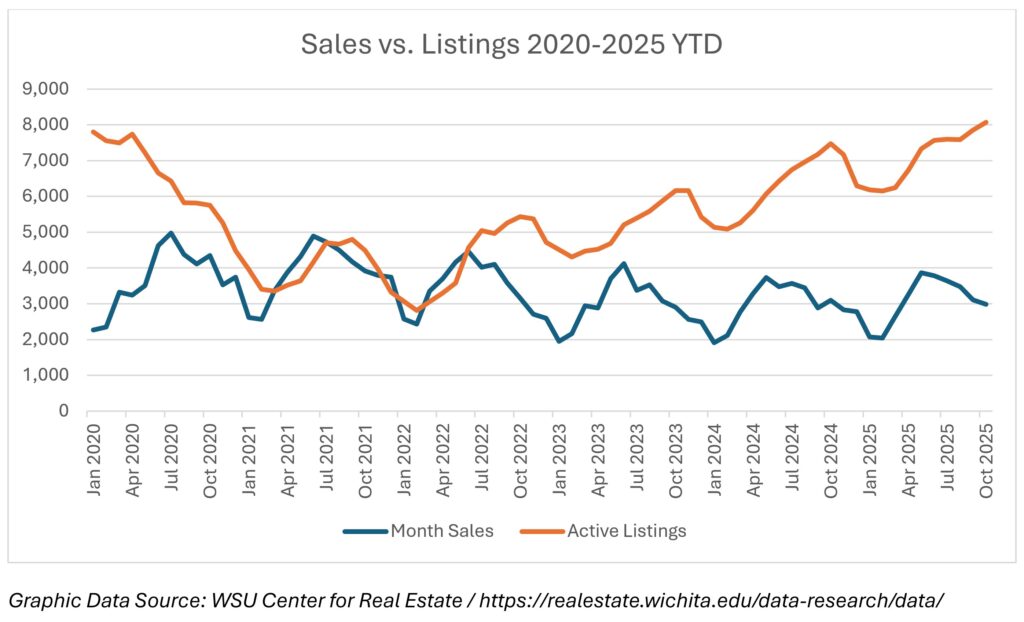
Over the past few years, the Kansas housing market has shifted from extremely tight inventory to a more balanced market. While supply was scarce through much of the post-pandemic period, listings began to grow again in 2023 and 2024, and inventory has continued to rise modestly into 2025 — offering more options for buyers and more competition for sellers. Redfin
This shift means sellers need to be more strategic in how they bring their homes to market in 2026 — and one option many homeowners overlook is selling through auction.
Current Economic and Mortgage Context (Dec. 2025)
Toward the end of 2025 (October–December), the Federal Reserve began cutting interest rates as part of a gradual easing cycle. During that time, the federal funds rate moved from 4.25–4.50% down to 3.50–3.75%. Yahoo Finance+1
A common assumption is that when the Fed cuts rates, those changes immediately show up in areas like mortgage rates. In reality, that’s not how it works. The Fed controls short-term interest rates, mainly what banks charge each other on very short-term loans. Mortgages, on the other hand, are long-term loans, and their rates are influenced by a broader set of factors — including inflation expectations, housing market conditions, and investor demand for mortgage-backed securities.
As of December 11, 2025, the average 30-year fixed mortgage rate remains in the low to mid-6% range — roughly where it’s been for much of the year — and may hold near those levels through 2026. AP News+1
What This Means for Sellers in 2026
1. Inventory Is Growing — Pricing Matters More Than Ever
With more homes available for sale, buyers have more options and are taking a closer look before making decisions. As a result, pricing matters more than ever, and getting it right from the start is key.
When a property enters the market overpriced, it’s far more likely to sit, require multiple price reductions, and lose momentum — all of which can weaken buyer confidence.
An auction approach shifts the focus from guessing the right price to creating competition through timing, transparency, and buyer demand, allowing the market to determine value at a specific moment rather than chasing it over time.
2. Buyer Interest Could Re-Accelerate in 2026
Even though buyers currently have negotiating leverage, the recent rate cuts may help support affordability and buyer confidence heading into 2026. Lower interest rates on the short end of the curve generally make financing slightly more accessible, even if mortgage rates don’t drop dramatically right away. Bankrate
Increased buyer participation later in 2026 could lead to renewed competition, making auctions especially appealing for sellers who want to capitalize on that interest.
3. Auctions Create Urgency and Transparency
Traditional listings can sometimes struggle to generate urgency, especially when buyers feel they can wait for a better offer. In contrast, auctions put a defined timeline on the sale, which can:
- Generate more immediate interest
- Stimulate competitive bidding
- Reduce the time your home sits on the market
This is particularly useful in an environment where buyers are comparing multiple properties and may otherwise delay an offer in hopes of better pricing later.
4. Auctions Offer Flexibility
Homeowners can choose the type of auction process that best fits their goals — from absolute auctions (where the property sells to the highest bidder regardless of price) to reserve auctions (where a minimum price is set). This flexibility can help sellers balance speed of sale with price expectations.
Bottom Line
The Kansas real estate market is evolving. With inventory increasing and mortgage rates remaining elevated relative to recent years, sellers in 2026 will need to be strategic and proactive. Auctions can be a powerful tool in that strategy — helping homeowners sell efficiently, generate competitive interest, and avoid the pitfalls of static pricing in a shifting market.